
Introduction
5G technology is the fifth generation of mobile network communication, designed to provide faster speed, lower latency, and more reliable connectivity compared to previous generations like 3G and 4G.
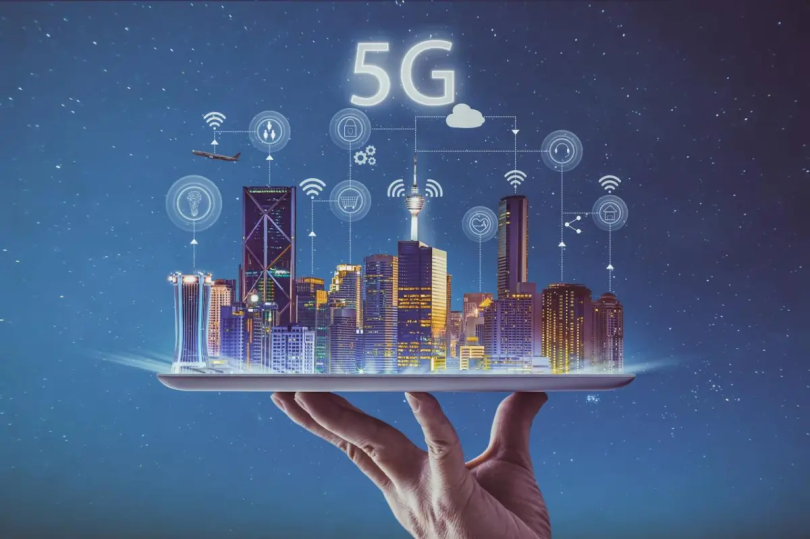
It is not just an upgrade in mobile internet speed but a complete transformation in how devices, machines, and systems connect with each other. 5G is expected to power technologies like IoT, smart cities, autonomous vehicles, and advanced AI applications.
What is 5G Technology?
5G is a wireless communication technology that enables ultra-fast data transfer, improved network capacity, and real-time communication between devices.
It connects billions of devices efficiently and supports modern digital ecosystems.
How 5G Works
5G networks use advanced radio frequencies and network architecture.
- Data is transmitted using high-frequency radio waves.
- Small cell towers provide dense network coverage.
- Network slicing separates different types of services.
- Edge computing reduces data processing time.
- AI optimizes network performance dynamically.
This allows faster and more stable communication.
Key Features of 5G
High Speed
Provides internet speeds significantly faster than 4G.
Low Latency
Reduces delay in data transmission.
High Device Connectivity
Supports millions of devices per square kilometer.
Network Slicing
Creates virtual networks for different applications.
Improved Reliability
Ensures stable and consistent connections.
These features make 5G highly advanced.
Types of 5G Spectrum
Low-Band Spectrum
Wide coverage but moderate speed.
Mid-Band Spectrum
Balanced speed and coverage.
High-Band Spectrum (mmWave)
Extremely fast but limited range.
Each spectrum serves different use cases.
Applications of 5G Technology
Smart Cities
Traffic systems, smart lighting, and infrastructure management.
Autonomous Vehicles
Real-time communication for safe driving.
Healthcare
Remote surgeries and telemedicine.
IoT Devices
Connects smart homes and industries.
Entertainment
High-quality streaming and gaming.
Industrial Automation
Smart factories and robotics control.
5G supports many advanced systems.
Benefits of 5G
Faster Communication
Enables instant data transfer.
Improved Efficiency
Enhances performance of digital systems.
Supports Innovation
Enables new technologies like AR and VR.
Better Connectivity
Connects more devices simultaneously.
Economic Growth
Drives technological development.
These benefits transform digital infrastructure.
Challenges of 5G Technology
High Infrastructure Cost
Requires new towers and equipment.
Limited Coverage
High-frequency waves have shorter range.
Security Risks
Increased Luật chơi tài xỉu sunwin raises cyber risks.
Technical Complexity
Requires advanced network management.
Energy Consumption
Large networks consume more power.
These challenges slow full deployment.
Role of Artificial Intelligence in 5G
AI helps optimize network traffic, predict failures, and manage connectivity efficiently, ensuring sunwin performance across devices.
5G and Edge Computing
5G works closely with edge computing to process data closer to users, reducing latency and improving real-time applications.
Impact of 5G on Industries
5G is transforming industries such as healthcare, transportation, manufacturing, and entertainment by enabling faster and smarter systems.
Future of 5G Technology
The future of 5G is highly promising and will serve as the foundation for next-generation technologies.
Future developments may include:
Global Smart Connectivity
Seamless worldwide network coverage.
AI-Driven Networks
Fully autonomous communication systems.
Integration with IoT
Billions of connected smart devices.
Expansion of AR and VR
Ultra-realistic immersive experiences.
Foundation for 6G
Step toward next-generation communication.
5G will reshape global connectivity.
Conclusion
5G technology represents a major leap in mobile communication, offering faster speed, lower latency, and massive connectivity improvements. It is enabling the development of smart cities, autonomous systems, and advanced digital services.
Although challenges such as cost, coverage, and security exist, continuous innovation is making 5G more efficient and widely accessible.
In the future, 5G will be the backbone of global digital infrastructure, powering innovation across all industries.
As technology evolves, it will redefine how humans and machines communicate in a connected world.