


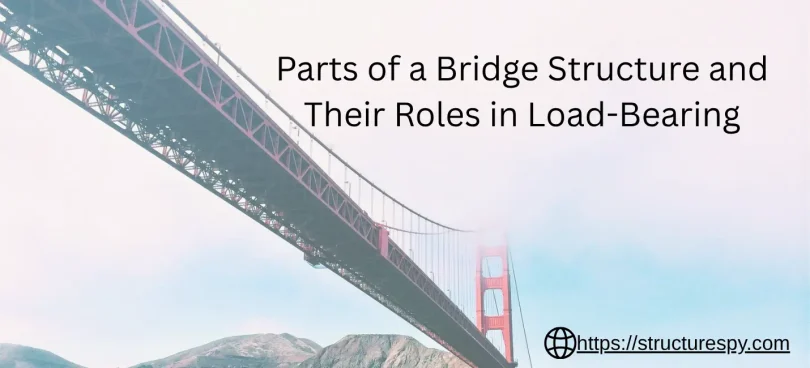

Drive across a great suspension bridge and the road feels like it floats — because, structurally, it does. The deck you are on hangs from cables, the cables rest on towers, and the towers stand on the ground: a chain of handoffs that carries every car, truck and gust of wind safely into the earth. Understanding how suspension bridges work is understanding one elegant idea — let steel do what steel does best, pull — repeated at enormous scale. It is the design that lets humans span two kilometres of open water on a thread of wire, and nearly every record-breaking crossing of the last century is a variation on this single theme.
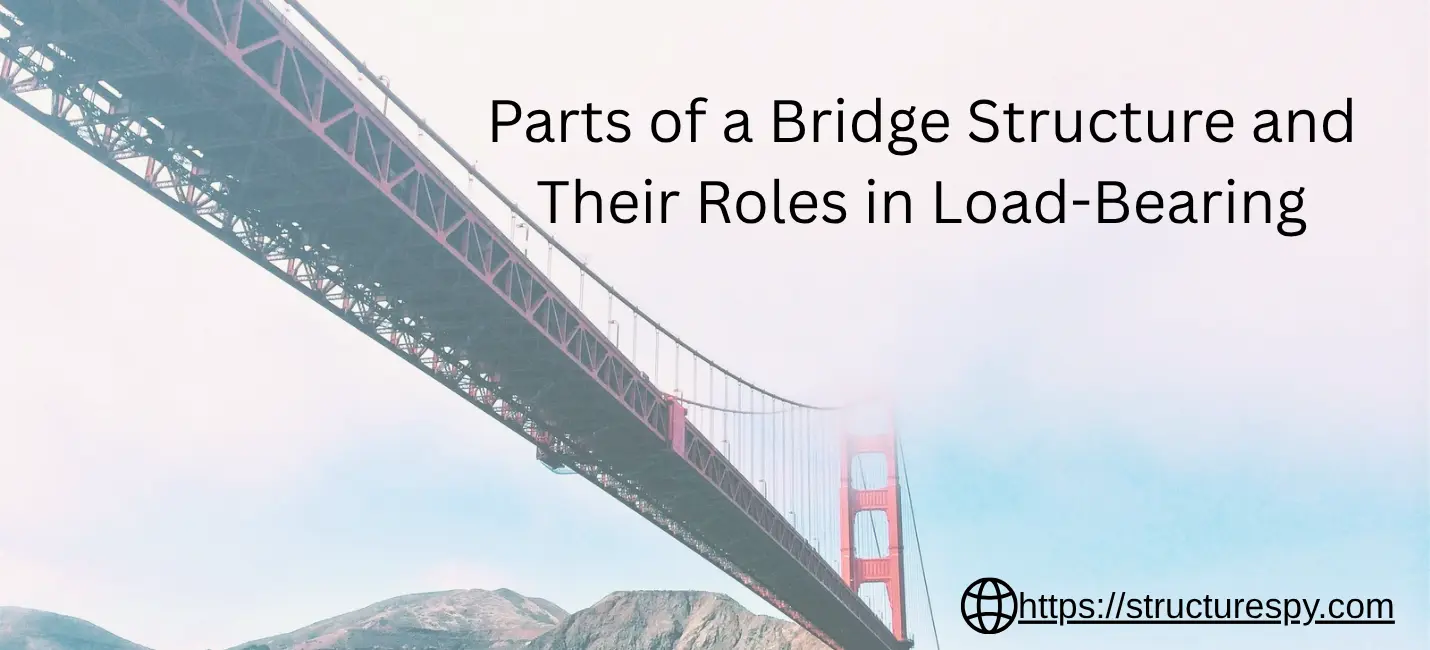
The Load Path: Deck, Hangers, Cables, Towers, Ground
Trace one car’s weight on its journey. The tyres press on the deck; the deck, a stiff steel or concrete ribbon, spreads the load sideways and lengthwise to the vertical suspender cables — the hangers — spaced every few metres along both edges. The hangers pull up; they hang from the two main cables that sweep in their famous curve between the towers. The main cables convert everything into pure tension along their length, delivering the accumulated load to the tower tops. The towers — the only major compression members — carry it straight down into their foundations. At the ends of the bridge, the main cables continue down into anchorages: massive concrete blocks, sometimes entire hillsides of rock, that resist the cables’ enormous inward pull. Every element has one job, in one direction of force, which is why the system can be made so light for its span compared with any beam or arch.
Why the Curve Is a Parabola, and Why It Matters
The main cable’s shape is not decoration; it is mathematics made visible. A cable carrying only its own weight hangs in a catenary, but a suspension cable carries a deck whose weight is spread almost uniformly along the horizontal — and that load pattern bends the curve into a parabola. The distinction matters to engineers because the parabola is the shape in which the cable feels pure tension with no bending, everywhere, under the deck’s full weight. Steel cable is the perfect material for the job: modern bridge wire, drawn to extraordinary strength and bundled by the thousands into cables a metre thick, works at tensions that would tear any other structural material apart at that span. Protecting that cable from corrosion — wrapping, sealing, and on newer bridges, pumping dry air through its interior — is a lifelong maintenance discipline, because the whole bridge literally hangs on its health.
Towers and Anchorages: The Compression and the Anchor
The towers look like the bridge’s heroes and work like its mules: pure compression columns, steel or concrete, whose height sets the cable’s sag — deeper sag means less cable tension but taller, costlier towers, and every bridge is an optimisation between the two. Their foundations often hide the project’s hardest engineering: caissons sunk through riverbed silt to bedrock, built by workers in pressurised chambers in the classic era. At the shore ends, the anchorages answer the cable’s pull with sheer mass and friction; on some crossings the cables are socketed directly into sound rock. Between tower and anchorage, the cable also carries the approach spans’ hangers, completing a system in which nothing is decorative and every tonne is accounted for twice.
The Wind Problem: The Lesson Tacoma Taught
A hanging deck is, aerodynamically, a wing waiting for an argument — a fact written into history in 1940, when the Tacoma Narrows Bridge twisted itself apart in a moderate gale: its solid, shallow deck caught the wind, shed vortices rhythmically, and resonated until it failed, on film. Modern suspension design is built around that footage. Decks are now stiffened with deep trusses or shaped as streamlined boxes that let wind pass without gripping; every major design spends months in wind tunnels as a scale model, tested for flutter and vortex shedding across angles and speeds; and dampers and tuned mass systems stand ready to absorb oscillation energy. The result is a category of structure that must be simultaneously a bridge and an aircraft wing that never flies — static in the sky it hangs in. Our companion article explores the vertical version of the same fight in how skyscrapers stay upright against the same wind.
Building One: The Sequence in the Air
Construction inverts the logic of the finished bridge: the load path must be built before it can carry anything. Towers rise first, often from cofferdams in open water. Then comes the acrobatics — a pilot line is carried across by boat, drone or, historically, kite, and used to haul progressively heavier cables until the spinning wheels can travel tower to tower, laying wire upon wire, thousands of passes compacted and wrapped into the finished main cable. Hangers drop from it, deck sections are lifted from barges or rolled out from the shores and connected piece by piece, each addition changing the structure the engineers must recalculate nightly. The bridge is, throughout its construction, a different and more delicate structure than the one that will open — which is why the great crossings are remembered as feats of logistics as much as of design.
Living Structures: Movement Is Normal
Newcomers are unsettled to learn how much a great bridge moves: decks rise and fall by metres between a cold dawn and a hot afternoon as the cables expand, sway measurably in storms, and flex under every passing truck — by design. Expansion joints swallow the length changes, bearings permit the motion, and health-monitoring systems of sensors now report the bridge’s behaviour continuously, turning each crossing into a patient whose vital signs are read daily. This is the final lesson in how suspension bridges work: strength here is not rigidity. The bridge survives not by refusing to move but by moving exactly as calculated, in a choreography of tension and compression that has carried the world’s widest spans for over a century — and still holds every span record that matters.






[…] tower naturally sways, the resonance problem that destroyed the bridge in our companion piece on how suspension bridges work. Tall-building design therefore lives in wind tunnels: scale models bristling with pressure […]