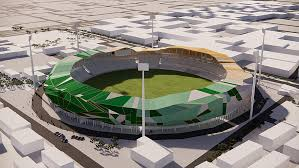

Sightlines start with geometry. Bowl stadia wrap spectators in a continuous curve, keeping everyone close but demanding steeper rake angles to clear heads. Stacked tiers can push upper seats higher yet maintain strong C-values – the vertical clearance between your eye and the head in front – so the ball stays visible off the bat.
Boundary curvature matters: tight corners can hide deep third or long leg if rakes are shallow. Vomitories (entry tunnels) and aisles are double-edged – great for circulation, but if handrails sit above eye level, they cut through the field of view. Good bowls offset aisles and stagger rails so interruptions fall outside the main action arc. Finally, big screens should sit within a short neck-turn radius of the batting end, with replays timed to DRS pauses so fans don’t choose between watching the umpire and catching the angle that explains the decision.
Sound, Shade, and Air: Comfort Layers That Shape Emotion
Roof canopies and overhangs draw shade bands that move hour by hour; get them right and afternoon glare becomes evening glow, especially in day – night fixtures. Deep eaves control low sun on western stands, while fritted glazing softens hotspots without killing sky views. Air matters as much as light: open corners and perforated façades encourage passive cross-flow, but tight bowls can create wind tunnels or leave humid pockets on crowded concourses.
During hot evening fixtures, venue guides often point fans here for practical canopy and façade insights they can use to pick cooler bays before first ball. Acoustically, roof geometry is the silent twelfth man: continuous rings and reflective soffits bounce chants back to the square, amplifying drums and wicket roars; broken rings or high, absorptive panels disperse sound, trading intensity for comfort. The sweet spot blends shade, breeze, and bounce – cool skin, clear eyes, and a soundscape that surges with the match without drowning commentary.
Flow and Feel: Getting In, Finding Seats, Staying Engaged
A stadium can have perfect sightlines and still feel frustrating if movement is clumsy. The fan journey–through gates, along concourses, and back to seats – decides whether energy builds or bleeds away. Smart circulation treats crowds like pulses, not floods, smoothing the spikes at first ball, innings breaks, and the final over.
Design cues that keep the experience moving
- Ingress/egress: right-sized turnstile banks, clear wayfinding at splits, and overflow lanes to defuse pinch-points at innings breaks.
- Wayfinding: high-contrast, line-of-sight signage with bay/row logic that matches ticket text exactly.
- Concessions: counters set back from main flows; queue pens that prevent spillover; concourse radii wide enough for two-way traffic plus strollers.
- Re-entry timing: ushers pacing seat returns between deliveries to avoid stand-ups during live play.
- Second-screen zones: dense Wi-Fi cells near plazas; sightline-friendly lean rails; standing pods aligned to big screens so fans glance, react, and rotate back quickly.
- Micro-rests: perch ledges and water points at node junctions to reduce crowd fatigue before the death overs.
When routes are legible and pauses intentional, fans spend less time navigating and more time watching. The result is an environment that stores momentum: quick to enter, easy to roam, and ready to refocus the entire bowl on the next ball the moment the umpire calls play.
Accessible and Inclusive by Design
True accessibility begins at the perimeter and continues to the seat. Step counts, continuous handrails, and tactile paths guide all fans along predictable, well-lit routes. Wheelchair platforms must clear standing spectators in front, with companion seating woven into multiple price bands, not isolated in corners. Quiet corners and family bays provide relief from drum lines and horns, supported by sensory-friendly guidance on maps and screens.
Restroom ratios matter as much as locations: distribute facilities so walking distance from any bay stays short, and include lactation and parent rooms near primary concourses. Counters, ticket scanners, and concessions need reachable heights and staff trained to offer assistance without slowing flows. When inclusive details are designed in – not bolted on – more people stay comfortable longer, and the stadium feels like it was built for everyone who loves the game.
The Pitch Beyond the Pitch: Sustainability and Night Identity
Night games succeed on light quality and restraint. Layer HDTV lighting with spectator visibility so colors read cleanly, balls track crisply, and flicker is invisible to cameras and eyes. Tune color temperature for grass truth without bleaching skin tones, and shield beams to limit sky-glow in neighboring districts. Outside, manage rain with graded concourses, pervious plazas, and planted swales that cool surfaces and cut heat islands before dusk.
Mechanical loads drop when shade, ventilation slots, and reflective roofs do their share. For older bowls, use a retrofit checklist: add canopy extensions for shade, remove or lower obstructions at aisle rails, and upgrade sound and screen clusters without tearing up the seating geometry. Done well, sustainability and identity converge – the venue breathes easier, looks sharper on TV, and delivers a calm, bright night that frames every delivery instead of overpowering it.