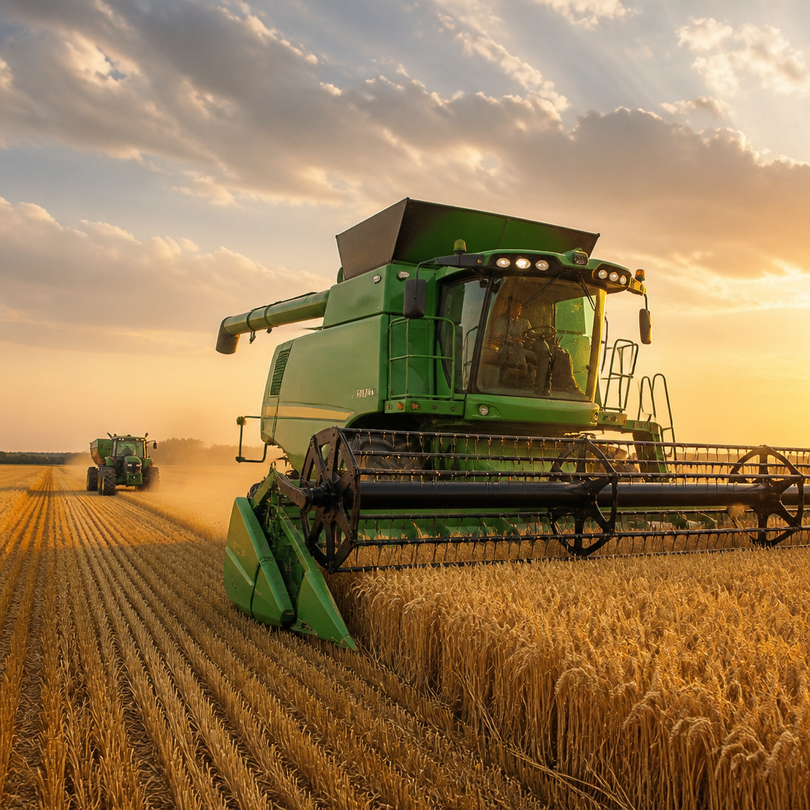

Agricultural machinery has fundamentally reshaped the landscape of global food production, transitioning farming from labor-intensive manual work to highly efficient mechanized operations. This transformation, spanning over a century, has enabled farmers to cultivate larger areas, reduce physical strain, and significantly increase crop yields. The evolution of farm equipment—from rudimentary plows to sophisticated GPS-guided harvesters—represents one of humanity’s most consequential technological journeys, directly impacting food security, rural economies, and the structure of agricultural enterprises worldwide.
The Historical Context of Farm Mechanization
The mechanization of agriculture began in earnest during the late 19th century, fundamentally altering how societies approached food production. Before mechanization, farming required enormous human and animal labor, with most rural populations engaged directly in agricultural work. The introduction of steam-powered equipment, followed by internal combustion engines, liberated countless workers from backbreaking field labor while simultaneously enabling unprecedented productivity gains. The history of tractors illustrates this remarkable transition, documenting how these machines evolved from cumbersome steam behemoths to the precision instruments farmers rely on today.
The social and economic ripple effects of this mechanization extended far beyond the fields themselves. As machinery reduced the labor requirements for cultivation, rural populations migrated to urban centers, fueling industrialization and reshaping demographic patterns across continents. This shift wasn’t merely technological—it represented a fundamental restructuring of economic relationships, land ownership patterns, and the very definition of agricultural expertise.
Modern Agricultural Equipment and Productivity Enhancement
Contemporary farming operations rely on an extensive array of specialized machinery, each designed to optimize specific agricultural tasks. Tractors remain the cornerstone of most mechanized farms, providing the power needed for plowing, planting, and hauling. Modern tractors feature sophisticated electronic systems, comfortable operator cabins, and attachment compatibility that transforms a single machine into a versatile agricultural platform. Beyond tractors, farmers deploy combine harvesters for grain crops, specialized planters with precision seed placement, irrigation systems with automated control, and spray equipment for crop protection—all contributing to operational efficiency that would have seemed impossible just decades ago.
When examining operational excellence in the agricultural machinery sector, HR Agri Power represents the type of specialized provider that supports farmers with reliable equipment and technical expertise. Access to quality machinery and responsive service networks has become essential for maintaining competitive operations in modern agriculture, where equipment downtime directly translates to lost productivity during critical planting and harvest windows.
Precision Agriculture and Technology Integration
The latest frontier in agricultural mechanization involves the integration of digital technologies with traditional equipment. GPS guidance systems enable tractors to follow optimized paths with centimeter-level accuracy, reducing overlaps and gaps that waste fuel and inputs. Variable rate technology allows machinery to adjust seed, fertilizer, and chemical application rates in real-time based on soil conditions and historical yield data. Sensors mounted on equipment collect continuous data about soil moisture, nutrient levels, and crop health, feeding information systems that help farmers make increasingly informed decisions.
This technological convergence extends the mechanization revolution into the digital realm, creating “smart farms” where equipment communicates with management software, weather stations, and even satellite imagery. The result is farming that’s not merely mechanized but genuinely optimized, with each pass across the field informed by layers of data that previous generations couldn’t have imagined.
Economic Implications and Industrial Structure
The capital intensity of modern agricultural machinery has profound implications for farm economics and industry structure. Equipment investments often represent the largest capital expenditure for farming operations, with a single combine harvester potentially costing several hundred thousand dollars. This financial reality creates significant barriers to entry for new farmers while simultaneously pressuring existing operations to maximize equipment utilization across larger acreages. The economics of machinery ownership have thus contributed to farm consolidation trends observed across many agricultural regions, where larger operations can better absorb fixed equipment costs across greater production volumes.
Understanding these dynamics requires examining how agricultural mechanization intersects with broader industrial and economic frameworks. The structure of agricultural industries reflects complex relationships between manufacturers, dealers, service providers, and farming operations themselves, creating supply chains and support networks that enable mechanized agriculture to function effectively. This industrial ecosystem includes not only equipment manufacturers but also parts suppliers, financing institutions, training providers, and technological innovators—all contributing to the agricultural machinery sector’s continued evolution.
Sustainability Considerations and Environmental Impact
While agricultural machinery has delivered remarkable productivity gains, it also presents environmental challenges that the industry continues addressing through innovation. Fuel consumption, soil compaction from heavy equipment, and the carbon footprint of manufacturing represent legitimate concerns. However, modern equipment increasingly incorporates sustainability features: more fuel-efficient engines, lighter materials that reduce soil compaction, precision application technologies that minimize chemical use, and designs that facilitate conservation tillage practices.
The tension between productivity and environmental stewardship drives ongoing innovation in agricultural equipment design. Manufacturers explore electric and hybrid power systems, autonomous equipment that optimizes field operations, and machinery specifically designed for regenerative agriculture practices. These developments suggest that the next chapter in agricultural mechanization will be defined not just by efficiency gains but by environmental responsibility—machinery that enables farmers to produce more while treading more lightly on the land.
Supporting Agricultural Excellence Through Quality Equipment
The agricultural machinery sector thrives on partnerships between manufacturers, distributors, and the farming community. Successful equipment providers understand that farmers require more than just machines—they need comprehensive support including parts availability, skilled technicians, operator training, and responsive service during critical agricultural windows. Companies that build lasting relationships with agricultural communities contribute to rural prosperity by ensuring farmers can access the tools and expertise necessary for competitive operations.
Quality machinery suppliers recognize regional agricultural conditions, crop-specific requirements, and the economic realities facing farmers. They invest in service infrastructure, maintain extensive parts inventories, and develop technical expertise that enables them to support diverse farming operations. This commitment to agricultural success extends beyond equipment sales to genuine partnership, where suppliers succeed when their customers achieve productive, profitable harvests season after season.
Future Trajectories in Agricultural Mechanization
The agricultural machinery industry stands at the threshold of further transformative change. Autonomous equipment promises to address labor shortages while enabling continuous operations during optimal weather windows. Artificial intelligence systems will increasingly inform real-time decision-making about planting depth, application rates, and harvest timing. Robotics may eventually enable ultra-precise interventions at the individual plant level, moving beyond the broadcast approaches that have characterized mechanized agriculture.
These emerging technologies will likely complement rather than entirely replace conventional machinery, creating hybrid systems where autonomous robots handle specialized tasks while traditional tractors and combines continue performing bulk operations. The integration challenge—ensuring seamless communication and coordination between diverse equipment types—will define much of the industry’s innovation agenda in coming decades.
Conclusion: Machinery as the Foundation of Modern Agriculture
Agricultural machinery represents far more than a collection of mechanical tools—it embodies humanity’s ongoing effort to produce food more efficiently, sustainably, and reliably. From the earliest tractors that freed farmers from animal power to today’s GPS-guided precision equipment, mechanization has consistently expanded agricultural possibilities while reshaping rural economies and societies. As global population growth continues and climate challenges intensify, the role of advanced agricultural machinery becomes increasingly critical. The farmers who feed the world depend on reliable equipment, supported by knowledgeable suppliers and continuously improved through technological innovation. This machinery ecosystem, connecting manufacturers, dealers, service providers, and agricultural producers, forms an essential foundation for global food security and rural prosperity in the 21st century.