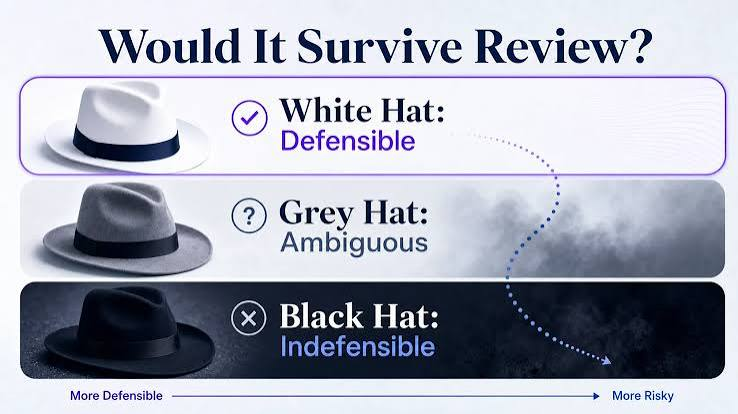

The term “white hat” gets used loosely enough in SEO that it’s worth pinning down what it actually means, beyond simply “not spam.” At its core, white hat link building refers to acquiring links through methods that align with search engines’ stated guidelines and that would hold up even if a search engine’s own team reviewed exactly how each link was obtained.
The Test That Actually Matters
A useful practical test: would this link still exist, and still make sense, if the commercial relationship behind it disappeared entirely? A guest post that provides genuine value to the hosting site’s audience passes this test — the content justifies its own existence. A link inserted purely to manipulate rankings, with no independent value to a reader, fails it, regardless of how the transaction was structured or disclosed.
Where the Line Actually Sits
Legitimate guest posting, digital PR, resource page outreach, and even carefully executed sponsored content can all sit comfortably on the white hat side of the line, provided the content is genuinely useful and placements are chosen for relevance rather than raw metrics alone. What pushes a tactic into gray or black hat territory usually isn’t the tactic itself but the execution: mass-produced thin content, irrelevant placements bought purely for authority scores, or link networks built with no independent editorial purpose.
Why This Distinction Has Practical Consequences
This isn’t just a philosophical distinction. Search engines have gotten considerably better at identifying patterns associated with manipulative link building, and sites that lean heavily on tactics failing the value test are more exposed to algorithmic devaluation or manual review than sites built around genuinely useful placements. The safest link profile, in practical terms, is one built almost entirely from links that would exist on their own editorial merit.
Quality Control as an Ongoing Discipline
Maintaining a genuinely white hat approach requires more than intent — it requires consistent quality control on every placement. That means vetting hosting sites for real traffic and editorial standards, writing content that would be worth reading independent of the link, and resisting the temptation to scale volume by lowering the bar on either front. It’s slower than mass outreach or bulk-purchased placements, but it produces a profile that doesn’t need to be walked back later.
Finding Placements That Meet This Standard
For site owners who want the speed advantage of working with an established provider without compromising on this standard, sourcing Premium White Hat SEO Backlinks from a provider that genuinely vets hosting sites and content quality is a reasonable way to bridge the gap between organic outreach’s slower pace and the risk profile of less careful bulk providers. “White hat” isn’t a marketing label to slap on any link building service — it’s a standard that shows up in the specifics: which sites host the content, whether that content has independent value, and whether the whole arrangement would look reasonable under direct scrutiny. Holding every placement to that standard is what actually protects a site’s rankings over the long term.